About the TP2M Project
Scientific Goals and Instrumentation
Introduction
As a multi-purpose facility, the TP2m telescope is designed to address a broad range of scientific objectives across several domains of modern astronomy. Its versatility allows it to support general astronomical studies, including stellar astrophysics, investigations of the interstellar medium (ISM), and research in both Galactic and extragalactic astronomy. This capability ensures that the telescope contributes to fundamental questions regarding the structure, composition, and evolution of stars and galaxies.
Beyond general applications, the TP2m is specifically optimized for Time-Domain Astronomy and the study of the Variable Universe. Its technical framework is ideal for rapid and repeated observations of transient and variable phenomena, including supernovae, kilonovae, gamma-ray bursts, fast X-ray transients, cataclysmic variables, and near-Earth objects. These science cases require timely response, flexible scheduling, and sustained monitoring, all of which are central strengths of the TP2m system.
Key Subsystems
Telescope: 2m F8 RC telescope, Alt-Az mount
Instrument: MCI, IR-Cam, ESOPO
Software: Observing control software
Infrastructure: Site, Road Access, Electricity, Network, Water Supply
Building: Enclosure, Dome system, Telescope Pier, Control Room, Instrument Supporting
Scientific Instruments
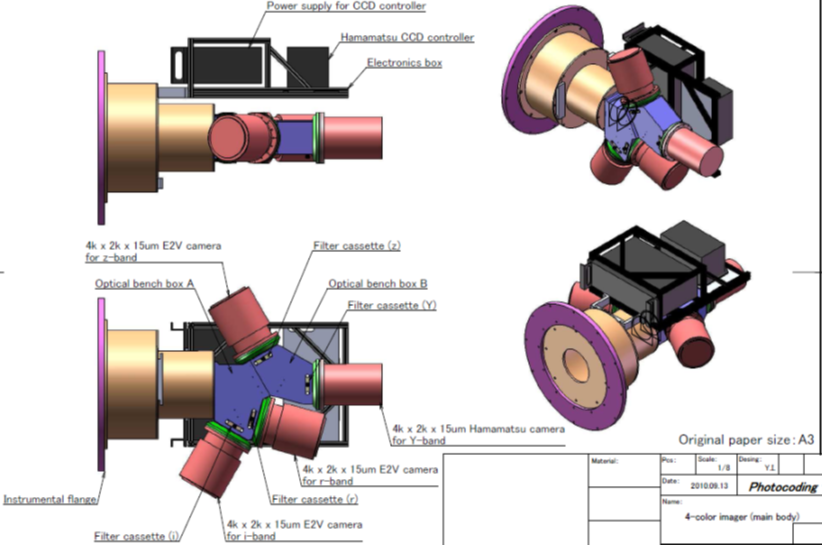
MCI
The Multi-Color simultaneous Imager serves as the first-light instrument, utilizing three cameras for simultaneous r', i', z' band observations, optimized for time-domain science.
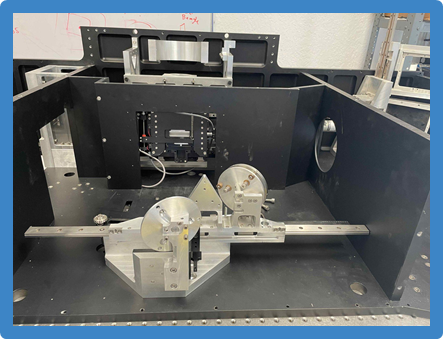
ESOPO
A unique dual-arm (blue and red) low-to-medium resolution spectrograph provided by UNAM, designed for specialized long-slit spectroscopy.
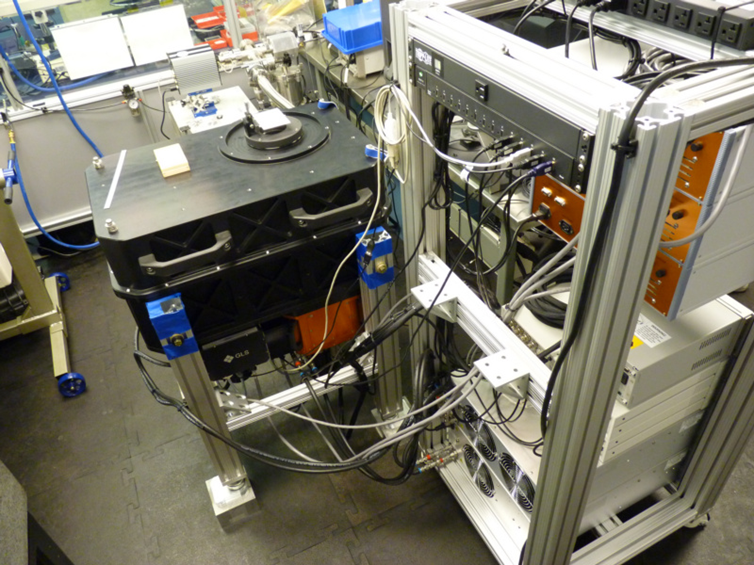
IR Camera
Featuring a HAWAII-2RG™ detector array, this camera provides high-sensitivity imaging in the near-infrared spectrum up to 2.5µm.